10.28.18
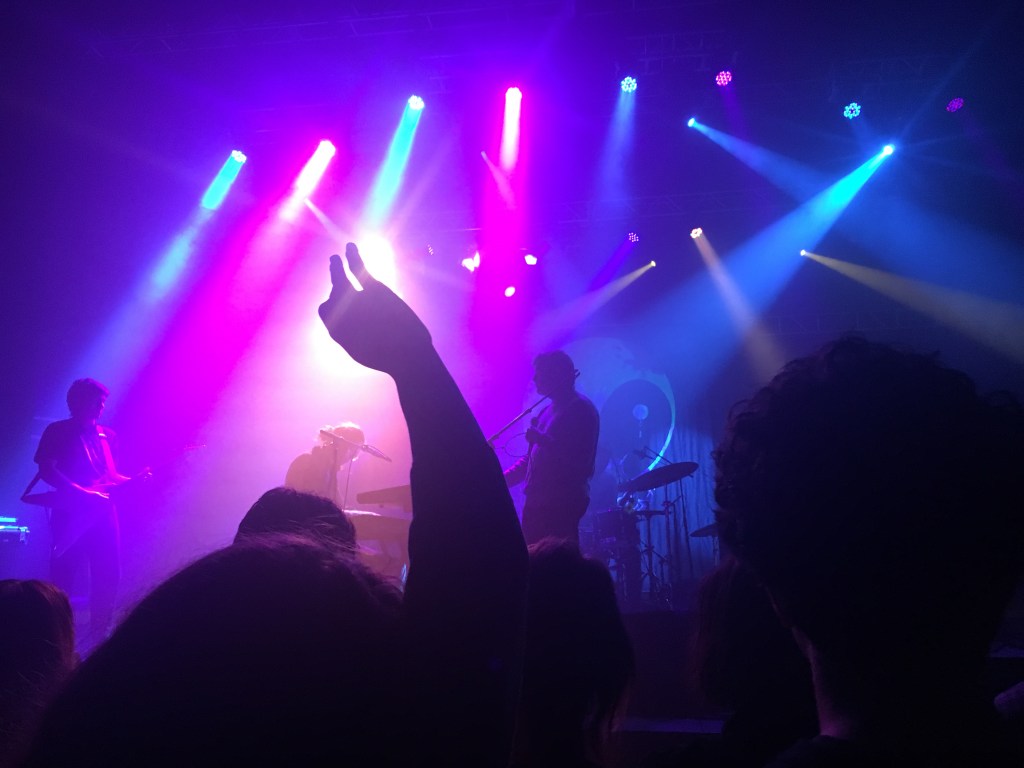
This past weekend, I headed to College Street Music Hall in New Haven, Connecticut, to see rising indie artist Kevin Krauter and his band. Though I had only been somewhat familiar with Krauter’s music prior to the show, I found myself thoroughly enjoying every single song, each more than the last, and ultimately left having downloaded all of his discography. Krauter’s music, at its core, fits best under the musical and emotional umbrella of indie music: songs with bedroom-quality production composed primarily of repetitive yet satisfyingly catchy, guitar-centric loops laid closely beneath reverb-heavy vocals touting sentiments of loneliness, warranting no more kinesthetic rhythmic reaction than a mere head bob. However, Krauter’s music shows no fear in departing from the the rhythmic and melodic ideas central to indie music, heavily incorporating these principles as they pertain to bossa nova rhythms, 70s R&B-like instrumental flourishes and structure, as well as sometimes including syncopated, seemingly avant-garde jazz inspired chord progressions. The inclusion of these elements is a big part of what seems to make Krauter’s music more complex and layered than the definitive indie bops of the current decade, while simultaneously harkening back to past decades of popular music. Perhaps an even greater part of what makes Krauter’s music both more complex and nostalgic than the common guitar-heavy indie releases of today is his use of analog synths in addition to his preexisting lush guitar patterns, helping to add new dimensions and color to his simple instrumentation and song structure.
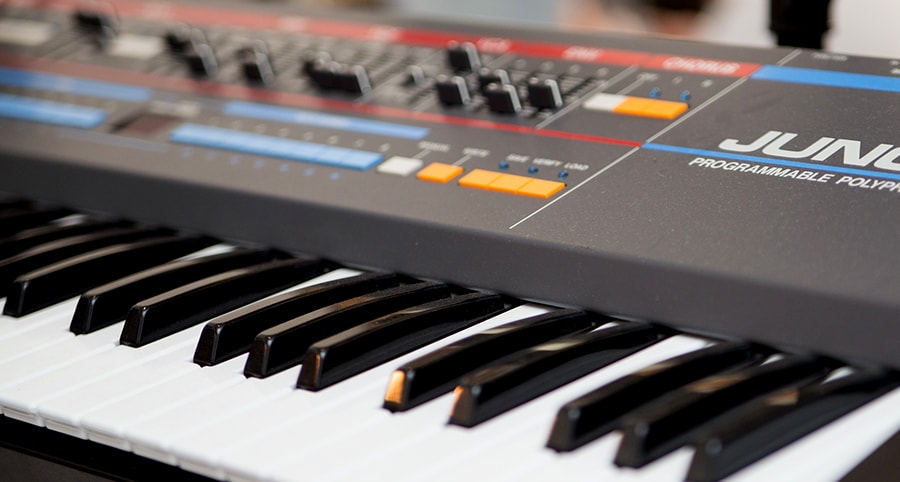
While it was difficult to see the exact model of synthesizer being played from where I was standing in the crowd, I could make out the word “JUNO” on the back of the instrument, likely indicating its relation to the Roland series of polyphonic analog synths from the early 1980s. There were other seemingly smaller synthesizers or perhaps digitally-controlled keyboards that were played on occasion by Kevin himself or the bass player (when she put down her red Rickenbacker 4003 for a few songs) but they were only played as atmospheric filler in support of the soloistic tendencies of the guitars and the Juno. They were also covered in stickers, making it nearly impossible to see their labels and names. During synthesizer solos, the sound of the Juno would emerge from the reverb-induced haziness of the layered guitars and other synths and play a new, yet relevant melody on repeat for a few bars before fully resolving back into the initially established groove of each song. In separating itself from the surrounding instrumentation, the synth player would often choose a more distinct tone for the Juno during solo sections, going for a noise best represented as a sawtooth or perhaps square wave. Heavy vibrato or frequency modulation would then be applied to the instrument during these sections to again separate it and allow it to fly over the supporting harmonies in soloistic manner.
Overall, I was thoroughly impressed by Kevin Krauter’s unique and relaxed approach to indie music and performance. I am looking forward to seeing more of his work in the future and hopefully having the chance to see him again sometime soon.

 FREE YOUR MIND